|
|
|
|
|
|
|
|
|
|
|
|
|
|
|
|
|
"Fortune Favours the Bold" |
|
|
|
|
|
Gules, a chevron ermine,
between three dolphins embowed Argent
"Show me the country, place, or spot of ground,
where 'Hassetts or their allies are not found"
John "Black Jack" Blennerhassett (1665-1738)
|
|
|
|
|
|
your help is needed to answer them, please click HERE |
if you enjoy this site, please also visit
Mark Humphrys' Blennerhassett research pages at:
|
Do you need help reading your old documents?
offer a professional but economical service for accurate
Transcription and Translation of old documents written
in English, Latin, French, Spanish, German or Dutch
HAMLET: "Is not parchment made of sheepskins?"
HORATIO: "Ay, my lord, and of calf-skins too"
Hamlet Act 5, Scene 1 |
| |
|
|
|
|
|
|
|
|
|
|
|
looking for someone?
SEARCH THIS SITE
a SEARCH tool is provided at bottom of this page
CONTRIBUTE TO THIS SITE
Send additions or corrections? Add a new page ?
For any of these please Contact Us |
|
|
|
If you find this site helpful, please consider a donation towards ongoing Blennerhassett genealogical research and maintenance of the website. PayPal is accepted. |
|
|
|
|
| |
|
| |
|
|
|
BLENNERHASSETT FAMILY TREE
Genealogy one-name study by Bill Jehan |
|
|
|
The project began in 1968, the result of curiosity about the maiden name of my dear grandmother Julia O'Connor (nee Blennerhassett) and has continued, on and off, ever since. Delving deeper and wider, the ancient family proved a genealogical goldmine, revealing fascinating individuals from many walks of life and tales of historic and cultural interest from the 13th century onwards.
Genealogies of the better known "gentry" lines of the family have existed many years, but early on it became clear that much printed and manuscript material existed in public and private archives that was not referenced by any easily available source, and many branches of the family were not documented at all. The purpose of this website is to record, with the help of others, a history of the Blennerhassett family (of Hassett families too, where they descend from Blennerhassett, as some do), compiling a world-wide pedigree, where possible connecting all branches and recording a brief history of individuals.
While much of this is the result of my research it also contains information generously contributed by Blennerhassetts and others. You are invited to add your own research on any relevant person or topic. The growth of the World Wide Web over the past 20 years has made much source material more easily accessible, but is difficult to identify and examine it all. if you are aware of items that should be referenced by this site, please Contact Us.
Living generations are not published. Extended family through female lines of descent, i.e. descendants carrying other surnames, are included whenever such information comes to hand but these are not systematically researched. People of other surnames with relatives who, in the past, have been given "Blennerhassett" as a middle name, are often of great help to this research. |
|
|
|
|
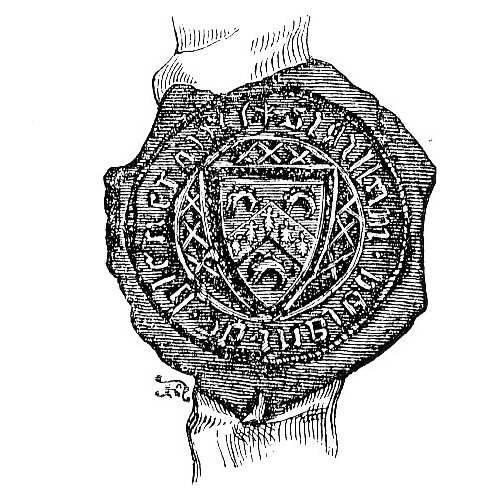
The origin of what is now essentially an Irish surname may be found in the ancient Manor of Blenerhayset and the modern village of Blenerhayset (now Blennerhasset, with single 't') in the northern English county of Cumberland (now a part of the recently created county of Cumbria), close to the border with lowland Scotland. Pronuncation of the place-name has been Blen'hayset, Blen'hassett, Blen'rassett or simply 'Rassett. Carrying no surname and owning no property, the family will no doubt have worked the land or otherwise served their Lord of the Manor. In the twelfth century one of them adopted or was given the name of the manor as a personal surname, he and his descendants being described as " de Blenerhayset" (i.e. " of Blenerhayset"). Subsequently the family left the manor of Blenerhayset for the nearby City of Carlisle, where in the 1350s is found Alan de Blenerhayset, a merchant active in local politics who later, in 1390, sealed a deed with the arms still borne by the family, using the seal illustrated here. |
|
Since early times the family have been known in their local community by the conveniently abbreviated name of 'Hassett, this version of their name also sometimes appearing in parish and other records. In Ireland this can cause of confusion to historians who sometimes will have difficulty distinguishing them from the purely gaelic and unrelated Hassett families of Co.Clare and Co.Tipperary.
|
John de Blenerhayset, perhaps the father or uncle of Alan, left us with the earliest representation of Blenerhayset arms, illustrated in colour in Thomas Jenyn's Book of Arms - I have seen this described as of date temp. Edward III (1327-1377) but that date is perhaps incorrect. His arms are " gules three dolphins hauriant, argent" without the usual "chevron ermine" which is first seen on Alan's seal of 1390. To carry such arms John or his immediate ancestor will have performed significant service, perhaps military, but how and when these arms were acquired is unknown. Use of the heraldic dolphin, king of fish, may indicate a connection with the sea.
Blenerhaysets prospered at Carlisle a further 200 years, regularly serving as Mayor, Sheriff or Burgess for that city or M.P. for the county of Cumberland. In 1547 the leading line of the family established themselves as gentry at Flemby Hall, Flemby (now spelled 'Flimby') on the Cumberland coast, while younger sons moved further afield to found dynasties in the English counties Norfolk & Suffolk and the Irish counties Kerry, Limerick & Fermanagh. |
Ralph de Blenerhaysett esquire, born c1400 in Cumberand, was 5th son of Ralph de Blenerhaysett (b.c1371) of Carlisle and Great Orton in Cumberland and his wife Joan (or Jane) de Skelton. In 1423 Ralph Jr married Joan de Lowdham of Loudham, Suffolk, a 14 year old heiress and already a widow, descendant of John de Lowdham, Lord of the Manor of both Loudham and Frenze in 1280. By this marriage Ralph gained the manors of Loudham, Toddenham & Halvergate in Suffolk; Frenze in Norfolk; and Kelvedon in Essex, thus becoming Lord of the Manor for each of these places, a young man of property and some standing in East Anglia. He is ancestor of the Blennerhassett families of East Anglia (Norfolk, Suffolk) and Northern Ireland (Co.Fermanagh).
In 1430 Ralph Blenerhaysett travelled from England to France as one of the retinue of Humphrey, Earl of Stafford, one year before the boy king Henry VI of England was crowned King of France, a Plantagenet attempt to permanently unite the two crowns following Henry V's famous victory at Agincourt in 1415, only fifteen years earlier.
Ralph's grave, a ledger slab of 1475 set into the floor of the chancel in the church of St Andrew the Apostle at Frenze, boasts a fine brass effigy, representing "Ralph Blenerhayset Esquire" wearing armour typical of the early 15th century, the oldest surviving image of a Blennerhassett.
Several generations of Ralph's descendants loyally served the Duke of Norfolk, the premier Lord of England. The Duke was head of Howard family who were leading English recusants, Roman Catholics who resisted the protestant reformation and refused to attend services of the Church of England. Notable among these was Ralph's grandson Sir Thomas Blennerhassett, Knight, of Frenze Hall, who was Minister (Seneschal, Steward, Principal Household Officer) to the 2nd & 3rd Dukes. Named as co-executor with the Duchess of Norfolk for the Will of the 3rd Duke, he in the event declined to act as such, no doubt for pragmatic political reasons in what were dangerous times.
|
Sir Thomas Blennerhassett, Knight, died in 1531, interred inside the small atmospheric church of St Andrew the Apostle, Frenze (pronounced locally as "Fir-enze"), anciently the seat of the Blennerhassett family in Norfolk. His effigy, a portrait brass depicting him in full armour and wearing a tabard or surcoat of arms, was at some date before July 1814 stolen from the church then by chance rediscovered at a curio shop in Munich, Germany, to be restored to the church through the generosity of a member at the Blennerhassett family. Norfolk artist and antiquarian John Sell Cotman in 1816 published an etching of this brass taken from his own earlier drawing, coloured so we may know how it should look in correct heraldic tincture. Cotman's image may also be seen in glass, at the church of St.Peter Nowton near Bury St Edmunds in Suffolk, on a small window panel of 1820 hidden among a dazzling array of painted glass. |
|
Sir Thomas' son, John Blennerhassett M.P. of Barsham in Suffolk, was Minister (Treasurer and Legal Adviser) to the 3rd & 4th Dukes of Norfolk, attending the recusant 4th Duke during his imprisonment at the Tower of London awaiting execution for treason. John's elder brother, the Rev. Thomas Blennerhassett, chaplain to the 3rd Duke, commenced an unconventional clerical career by being installed as Commendator (a clerical office similar to that of Rector) for the parish of Hardingham in Norfolk at the tender age of 11 years, authorised by a Bull of dispensation from Pope Leo X...
|
KERRY & LIMERICK
Of these once flourishing branches only the Kerry and Limerick families survive today, the others extinct in the male line, thus all living Blennerhassetts are of Irish descent. Their common ancestor is Robert Blennerhassett of Flimby, Cumberland, who settled in Co.Kerry, Ireland soon after his father Thomas was, on 14th August 1590 (32 Elizabeth I), granted land as a planter or undertaker in the Plantation of Munster. The plantation had been established under Elizabeth I on the vast Munster estates forfeited by the rebel 15th Earl of Desmond, Gerald FitzGerald, whom she had proclaimed traitor and outlawed in 1579 and who was murdered (at Glenageenty, Ballymacelligott) in 1581.
This grant of lands to Thomas Blennerhassett was made by Sir Edward Denny, of Dennyvale & Tralee, one of the original Munster planters who in 1587 had been granted 6,000 acres including the town and the Earl's chief castle of Tralee. It was from this earlier Denny grant of lands that Thomas Blennerhassett was granted Ballyseedy, Ballycarty, Ballymacelligott and adjoining lands to the west of Tralee, that grant conditional on Thomas and his heirs rendering one red rose annually at the festival of Saint John the Baptist and paying a rent of six pounds sterling (£6) per year. Ballycarty & Ballyseedy each contained an ancient Geraldine fort that could be made habitable and could be defended. Robert settled initially at Ballycarty (its ruins providing a site for subsequent generations of Ballycarty House) and later at Ballyseedy, where three generations of Ballyseedy ruins survive at the west end of Ballyseedy Wood, the wood now a public park for the people of Tralee. From that time the Blennerhassetts have remained a prominent and well respected family in both Kerry and Limerick.
FERMANAGH
Their distant kinsman, an Elizabethan soldier, writer and poet from Norfolk also named Thomas Blennerhassett, was stationed at Guernsey Castle (Castle Cornet) in St Peter Port, Guernsey, Channel Islands. He also served in Co.Fermanagh, Ireland c1600 and a few years later this Thomas, with his brother Sir Edward Blennerhassett, Knight, settled by the beautiful Loch Erne in Fermanagh, having in 1610 been granted land in the Plantation of Ulster, on confiscated Maguire property in the western part of the Barony of Lurg. Their property stretched from Belleek to the river Bannagh and there they built Castle Hassett (now named Crevenish Castle) at Hassettstown (now named Ederney), also Hassett's Fort (now named Castle Caldwell) and the new towns Belleek, Ederney & Kesh. Belleek is known for its fine and delicate pottery.
WHO WERE THEY?
They were the gentry, farmers, craftsmen, miners, engineers, medics, nurses, lawyers, teachers, clergy, soldiers, seafarers, police, writers, poets, painters, musicians, cottiers, farm labourers, servants, paupers... Four were knighted, one created Baronet of Blennerville in Co.Kerry. They were representatives and politicians, appointed or elected Councillor, Bailiff, Sheriff, Mayor or Member of Parliament in both England and Ireland.
They were royalist and republican; Jacobite and Williamite; anglican, puritan, non-conformist & roman catholic; landlord and tenant; master and servant; rich and poor; genteel and scandalous...
|
|
They sat on Grand Juries, served as magistrates, as judges... and appeared before them. They were imprisoned. They fought duels. In Ireland they campaigned for Home Rule, and against Home Rule. Henry Blennerhassett M.D. and others of his family were active supporters of Daniel O'Connell, "The Liberator", Henry signing the "Protestant Petition in favour of Catholic Emancipation" and presiding over a number of public meetings where the people of Tralee proclaimed support & sympathy for O'Connell. |
In 16th century Cumberland they patrolled the western marches of England watching for invading Scots. In mid 17th century Ireland some were Jacobites supporting Charles I and Charles II, opposing Cromwell; in the late 17th century John "Black Jack" Blennerhassett was a Williamite, supporting William III "of Orange" and the "Glorious Revolution". They served in the Royal Navy during the Napoleonic Wars and the American Revolution. Blennerhassetts were present at Trafalgar, Waterloo, the Indian Mutiny, the Crimea, the Anglo-Boer War in South Africa, on the Western Front, at Gallipoli, in North Africa, in Bomber Command.
During the American War of Independence a young Royal Navy Lieutenant, James Blennerhassett, was serving on HMS "Serapis" (44 guns) during her infamous duel with American privateer Bonhomme Richard, whose commander John Paul Jones was later to write "...no action before was ever, in all respects, so bloody, so severe and so lasting...".
Harman Blennerhassett, member of the revolutionary "Dublin Society of United Irishman", had following the death of his elder brothers inherited a considerable landed estate at Castle Conway, Killorglin, Co.Kerry. In 1795 he sold the estate, thus breaking the entail, then married against parental wishes. He and his bride Margaret Agnew in 1796 fled scandal to the USA, where in Virginia they settled at an island paradise on what was to become known as "Blennerhassett Island", in the Ohio River.
Drawn into the grand designs of ex U.S. vice-president Aaron Burr, the two men were arrested, charged with high treason against the United States. Released from prison, with what little remained of his fortune Harman became a cotton planter at Nachez, Mississippi; folowing the failure of this enterprise he moved to Lower Canada (Quebec) then returned to Europe, ending his days on Guernsey in 1831.
In the late 18th and early 19th centuries a fortunate few were among the fashionable taking houses for the season at Georgian Bath, while in a side street another manufactured stays for ladies' undergarments.
The Crimean War saw Capt. Thomas Hamilton V.C., grandson of Susan Blennerhassett of Killorglin, awarded the Victoria Cross, Britain's highest military honour for gallantry in the face of the enemy, for actions during the Crimean war while serving with the 68th Regt (Durham Light Infantry) at Sebastapol in 1855. The citation ends:
"He was conspicuous on this occasion for his gallantry and daring conduct.”
During the American Civil War brothers from Missouri fought on opposite sides. John Blennerhassett at New York attempted to raise his own Union regiment to join the the Irish Brigade (an infantry brigade predominantly of Irish Americans, the first regiment in the brigade being the 69th New York Infantry, known as the "Fighting 69th" or "Fighting Irish").
|
Harman Blennerhassett (1764-1831).
image copyright © 2008
Blennerhassett Island State Park
- used with permission - |
Many served in the Great War. Giles Blennerhassett was an "ace" with the Royal Flying Corps. Capt. William Lewis Blennerhassett, D.S.O., O.B.E., Croix de Guerre, Order of the White Rose of Finland, (known as "Willie") had during WWI joined the British Intelligence Corps, 5th Army. He was seconded to MI.1(c) (Secret Intelligence Service), serving in France, Switzerland and USA. After the war he served in Northern Russia, Lithuania and Finland, becoming British delegate at the League of Nations.
Arthur Blennerhassett of Ballyseedy scoured the USA, Australia & New Zealand for army remounts, while his wife Nesta and their daughters Hilda & Vera nursed the wounded, first at the battlefields of France and later on hospital ships in the Mediterranean. For this service Nesta was awarded an M.B.E. and all three, unusually for civilians, received the B.E.F. 1914-15 star (Mons Star). The elder daughter Vera was awarded an O.B.E. for her work in providing comforts for soldiers and prisoners of war.
During WWII Alec Blennerhassett Haden-Morris R.N. was killed when battle cruiser H.M.S. "Hood" (The Mighty Hood) exploded and sank during her duel with German battleship Bismark, suffering the loss of her entire crew save three. In 1940 Lieut. Sir Marmaduke Blennerhassett R.N.R., serving on HMS "Greyhound" assisting evacuation of beleaguered British and French troops from Dunkerque, died on the day of the birth of his only child, the present Baronet. |
Richard "Dick" Blennerhassett R.A.F. on several occasions piloted the Prime Minister, Sir Winston Churchill. While taking Churchill to the Casablanca conference they encountered a Messerschmitt squadron but escaped by cloud hopping, for which service Churchill personally arranged that a medal be struck, especially for him.
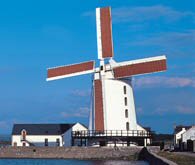
In Ireland, Blennerhassetts laboured long and hard farming the fertile land of North Kerry, some owning their farms, others leasing until the 1885 and 1903 land acts enabled and encouraged Irish tenant farmers to purchase from their landlord the land they worked. Rowland Blennerhassett (later created Sir Rowland Blennerhassett, first Baronet of Blennerville) established Blennerville as the port for Tralee by constructing Blennerville Quay and in 1800 building Blennerville Windmill for the production of flour. Tragedy followed when his wife Millicent, while inspecting their newly completed mill, looked out of an upper doorway and was killed by a passing sail.
Lucy Blennerhassett with her husband John Sapsford were administrators for and personal assistants to philantropist Baroness Angela Burdett-Coutts of London, heir to the Coutts banking fortune, who in the mid-nineteenth century devoted herself selflessly to providing housing for the poor of London's east-end and giving large scale help to the south-west of Ireland, where during the famine she fed and clothed whole districts, lent money to restore the fishing industry and assisted large scale emigration.
Some mined lead in Cornwall, while others sought their fortune in the gold rushes of California and Australia. During the 19th century they sailed from Liverpool, Queenstown or Blennerville to become pioneer settlers and farmers in Australia, Canada, New Zealand, South Africa and the United States of America. James Blennerhassett steamed to a new life farming in Australia on board Brunel's S.S. "Great Britain", the first large ship constructed of iron and using a screw propeller. William Ledman Blennerhassett was locomotive engineer with the infant Canadian Pacific Railway when, in 1885, he drove the first steam engine to cross the final bridge built to complete the C.P.R. and thus unite Canada east to west by rail - a locomotive was later named for him "William Blennerhassett". William H. Blennerhassett, licensed to sell an early document copying system "The Electric Pen" devised by prolific inventor Thomas Alva Edison, was in his leisure time pitcher for the first Baseball club at Port Huron, Michigan.
|
|
image copyright © 2008-18
Kerry County Museum
- used with permission - | Richard Blennerhassett M.D., one of a Blennerhassett medical dynasty from Ballymacprior in Co.Kerry, was for many years a respected ship's doctor, on board sailing ships carrying hopeful emigrants intent on escaping the effects of famine in the West of Ireland for a new life in North America. Four of these years were spent aboard the barque "Jeanie Johnston" regularly sailing from Blennerville Quay to Quebec, occasionally to New York or Baltimore, returning from these voyages laden with Canadian timber. During Richard's service not a single passenger or crew member was lost to disease or injury, perhaps a unique record for shipping of the period, and on his leaving the ship at the end of 1852 the crew presented him with a fine surgical saw in steel, brass and ivory as a sign of their appreciation and affection. He died of Cholera in 1854 on board the ship "Ben Nevis" while moored at Queenstown (since renamed Cóbh, pronounced Cove) in Cork harbour prior to sailing for Galveston, Texas. He is buried in the Old Church graveyard at Cóbh but sadly no headstone survives.
A full size working replica of the "Jeannie Johnston" was built in recent years at Blennerville, fitted out at Fenit and may be seen moored at Dublin, now her home port. | |
Rose Aimée Blennerhassett ("Sister Aimee") , Lucy Sleeman ("Sister Lucy") and Bertha Welby ("Sister Beryl") were three enterprising and couragous nursing sisters who in 1891 left Beria on the East African Coast to travel inland, 70 miles up the Pungwe River river in a small boat followed by 120 miles on foot, to Umtali in Manicaland where they established the first hospital in what is now Zimbabwe. They are said to be the first European women enter central Africa from the east coast. Lucy later married Granville Vines, a young engineer who had installed the first electric lighting at the diamond-mining town of Kimberley. During the siege of Kimberley in the Anglo-Boer war he operated the town's searchlight, sending signals with the light beam, the only means of communication between the town and the outside world. |
| |
SHOULDERS OF GIANTS
John Blennerhassett of Castle Conway was author of an early genealogy of his family in Ireland, commenced while held prisoner at Galway in 1689-1690 during the 'Williamite' wars, completed shortly before he died c1738. Two of his original manuscripts survive, the later and more extensive, known as "Black Jack's Book", having been fully transcribed twice, by notable Kerry historians Arthur Blennerhassett Rowan in 1855 and Mary Agnes Hickson c1865.
Edward Francis Browne, whose grandmother Frances Browne was granddaughter of "The Great Colonel John" Blennerhassett of Ballyseedy, inherited a quantity of original documents relating to the family. From these and other sources he compiled a beautiful leather-bound manuscript pedigree, completed 1911 and presented to Arthur Blennerhassett of Ballyseedy.
An outline family tree was published in earlier editions of "Burke's Landed Gentry" but disappeared from that work after 1912. Reinstated in 1976 for "Burke's Irish Family Records", the Blennerhassett entry was wonderfully enlarged and rewritten by genealogist Brian Fitzelle. Despite this advance, many branches remained incomplete, undocumented or hidden, much history yet to be discovered.
ACKNOWLEDGEMENT
Information has been drawn from published work, public records and manuscripts in private archives. Many individuals have made important contributions and continue to do so, kindly sharing their own research material, for which assistance and support I am grateful - this site would not be possible without such help. I have not listed names, you know who you are, but do intend to add a page for contributors. Among you is one so outstanding she has be publicly acknowledged - Beatty Blennerhassett of Victoria, for many years organizer of family reunions, enthusiastic collector and guardian of a treasure-trove of papers relating to Blennerhassett and other families in Australia, New Zealand & elsewhere, is known and appreciated by everyone with an interest in this family. Thank you Beatty, and thank you to all who have contributed.
I recommend the genealogy website of Mark Humphrys who, in researching and developing his personal family history on an extraordinary scale, has created an important record of his ancestral Blennerhassett connections and made life more interesting by offering "The Blennerhassett Challenge" which may be followed on his Blog.
|
FORTES FORTUNA JUVAT
THE BLENNERHASSETT PEDIGREE | |
Earlier paper versions were titled "The Blennerhassett Pedigree". Printed on request in small quantities (in 1994, 1998, 2000 & 2001), they had limited distribution and the method of publication proved too expensive to maintain. These are obsolete, superseded by this website.
That there is an interest among members of the family, other Blennerhassett descendants and local historians is shown by the size of the mailbox. Many people have requested that information on earlier generations be made more widely available, this website being a response to these requests. Personal data about living people is not placed on the site except by request of the individual concerned. If you wish to see your own particular branch of a family tree in more detail, please get in touch.
To permit larger quantities of family tree data to be viewed as single documents, each branch has been created as a spreadsheet, displayed as a searchable PDF document. As this does not require use of a specialised genealogy program or database, no GEDCOM format output is available.
Pages not yet functional are marked UC (Under Construction), others are incomplete.
Thank you for your patience.
|
|
Bill Jehan
this website started
14 November 2008
|
|
|
|
|
|
|
|
|
HOW YOU CAN HELP
Appropriate photographs of people, places, inscriptions, etc are welcomed, as are individual pieces of research.
Please report factual errors or omissions, items to be added or removed, spelling mistakes, duplications on the same page, broken links, suggestions of any kind. There are page cross-reference errors resulting from the move to the website, these will take some time to correct.
If you believe any text, image or photograph used on this site infringes your copyright, please tell me, so that permission to use may be requested and copyright acknowledged, or the offending material removed.
If you have your own genealogy or local history website, and an interest in or connection with the Blennerhassett family, please consider adding a link to this site.
Donations towards the costs of continuing research and for maintaining this website are appreciated.
|
|
|
|
|
|
|
|
IRISH GENEALOGICAL
RESEARCH SOCIETY
London & Dublin
|
|
|
|
|
|
|
|
|
|
|
|
|
|
|
|
Guild of One-Name Studies
member 4930
|
|
|
|
|
| |
|
|
|
SEARCH THIS SITE
To search for a single word use the search field below.
If your search results take you to a PDF family tree rather than to a conventional webpage, to look for your word or phrase within that family tree do this:
1. On the dynamic toolbar (located at bottom centre of the PDF family tree window) click on the right-hand Adobe icon - it looks like this: |
|
|
2. Click on the "binoculars" search icon (located at the left-hand edge of the display). |
|
| |
|
|
|
|
|
|
visitors to this site since
opening 14th November 2008
|
|
|
|
|
|
|
|
CLICK ON MAP
|
|
|
|
|
| |
|
|
|
|
COPYRIGHT NOTICE
This website and its content is copyright © Bill Jehan 2008-2018, all rights reserved.
Any redistribution or reproduction of part or all of the contents of this website, in any form, is prohibited unless written
permission has been obtained from Bill Jehan and any other named copyright holder, excepting the following:
- You may print or download to a local hard disk extracts of the content for your personal and non-commercial use only.
- You may copy extracts of the content to individual third parties for their personal and non-commercial use only,
if you acknowledge this website as the source of the material.
You may not distribute or commercially exploit the content, nor may you transmit it or store it in any
internet or intranet website or other form of electronic retrieval system, without express written permission.
COPYRIGHT OF OTHERS
I wish to honour the copyright of others. If you believe any text, image or photograph used on this website infringes your copyright,
please tell me, in order that permission to use may be requested and copyright acknowledged, or the offending material removed.
DISCLAIMER
This website content is believed to be accurate but no guarantee is made as to the accuracy of any information presented.
Your corrections are invited.
|
|
Go little book, God send thee good passage;
choose well thy way, be simple of manner,
let thy clothing be like thy pilgrimage
and, especially, let this be thy prayer
unto all that thee will read or hear:
"Where thou art wrong, after their help to call,
thee to correct, in any part, or all."
"La Belle Dame Sans Merci" ("Beautiful Lady Without Mercy")
by Alain Chartier, 1424 - translated from the French by Sir Richard Roos
|
|
|
|
|
|