|
|
Questions to be answered
your assistance is needed... |
|
|
|
If you can assist in answering any of these questions, please Contact Us |
|
|
|
|
1. |
HASSETT STREET NAMES IN ENGLAND
♦ Hasset Road, Homerton, Hackney, London
♦ Hassett Street, Bedford, Bedfordshire (NOTE: There were Blennerhassetts in Bedfordshire during the 16th century)
♦ Hassett Close, Preston, Lancashire
 Why are these three streets in England so named? Why are these three streets in England so named? |
|
2. |
|
IRISH LIVERY BUTTONS WITH BLENNERHASSETT ARMS
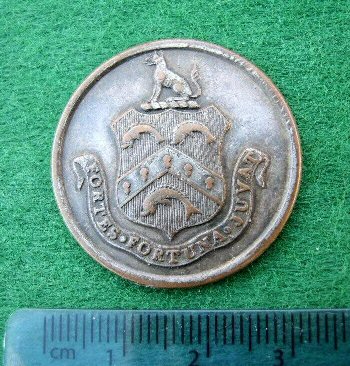
For the household livery uniform of which Blennerhassett "big house" were these Brass Livery Buttons made?
Candidates are Ballyseedy House (a.k.a. Ballyseedy Castle) near Tralee, Co.Kerry and Churchtown House near Killarney, Co.Kerry but could be from elsewhere and I find no evidence either way...
|
|

|
|
|
3. |
UNIDENTIFIED PORTRAIT MINIATURE
|

|
|
|
|
|
Location of the grave of ROSANNA BLENNERHASSETT 1907
East African pioneer nursing sister Rosanna "Rose" Aimée Blennerhassett - a.k.a. "Sister Aimée" (1843-1907) is co-author of "Adventures in Mashonaland, by two Hospital Nurses, Rose Blennerhassett and Lucy Sleeman", published 1893.
Rose died unmarried 9-Oct-1907 aged 64 at Carqueiranne near Hyéres, Provence, France
NOTE: Carqueiranne is a commune in the Var department in the Provence-Alpes-Côte dAzur region in southeastern France.
Rose is not interred at the town cemetery
(Cimetiere Communal de Carqueiranne) - where is she buried?
Perhaps at a nearby British Cemetery? Is there a headstone?
|
|
Rose Blennerhassett and Lucy Sleeman
in England (from 1893 newspaper)
where is the original of this photograph? |
NOTE: with Rose and Lucy in Manicaland was another other nursing sister, Bertha Anne Welby, known as "Sister Beryl":
Bertha Anne Welby (1861-1941) a.k.a. "Sister Beryl" (1861-1941) later Bertha Lichfield (she married Dr. James William Lichfield at Umtali, Rhodesia 1891). She and her husband returned to England. Her husband died in 1907 at Rochford, Essex.
As a widow Bertha lived at Finchley, North London with her sisters Wilhelmina Anne Welby and Rose Ethel Welby.
Bertha Anne Lichfield died in December 1941 - interred in the churchyard of St Peter's, Wrecclesham, Surrey where her sister Rose Ethel Welby was also buried in 1941.
Does a photograph of Bertha Anne Lichfield, nee Welby (a.k.a. "Sister Beryl Welby") exist? Is a photograph of the headstone for Bertha and Wilhelmina available?
|
|
|
5. |
WHO WAS SIR THOMAS BLENNERHASSETT, knighted by King James I in 1603 ?
In 1603, within a three month period, King James I raised funds by conferring knighthoods on 700 landowners, on receipt of payment of £50 from each. Edward Blennerhassett and Thomas Blennerhassett were among those knighted by James on 23-Jul-1603, shortly before his coronation, in the Royal Gardens at the Palace of Whitehall, London. They had responded to a summons made 17-Jul-1603 for all persons that had £40 in lands to come and receive the honour of knighthood. They were two of 300 men dubbed knights on the 23rd & 24th July.
Sir Edward Blennerhassett is known to be Edward Blennerhassett, of:
- Horsford Park, Horning, near Norwich in Co.Norfolk
- Laythes Hall (a.k.a. Hassett's Hall or "Hassetts House") Pockthorpe, Norwich
- Co.Fermanagh, where he was granted lands in 1610.
However, the identity of Sir Thomas Blennerhassett is uncertain. [BLOMEFIELD vol.? p.?] describes the new knight as "...Thomas Blennerhassett who also went to Ireland…" but there are two men of appropriate status who fit this description. My difficulty is, having not seen either man anywhere described as "Sir Thomas". The two candidates are:
a) Capt. Thomas Blennerhassett (b.1549 d.1624/5) of Horsford Park, Norwich, Norfolk and of Castle Hassett (now Crevenish Castle) at Hassettstown (now Ederney) near Kesh, Inniskillen, Co.Fermanagh.
Thomas Blennerhassett was a soldier, a puritan, writer on Ireland and poet who wrote in praise of Queen Elizabeth I. He was also the brother of Sir Edward Blennerhassett here mentioned, one of the two Blennerhassetts knighted on the same day, but when these two brothers are found mentioned together, Edward is usually named "Sir Edward" but Thomas is not named "Sir Thomas".
b) Thomas Blennerhassett of Flimby Hall, Flimby (formerly Flemby), Co.Cumberland, as an Undertaker or Planter in "the plantation of the Province of Munster", received on 24-Aug-1590 (32 Elizabeth I) from Sir Edward Denny, Knt a grant of forfeited FitzGerald lands in Kerry including the Castle, town & lands of Ballycarty and of Ballyseedy. He travelled to Kerry but did not settle there, returning to his home at Flimby. His son Robert Blennerhassett did settle in Kerry, to become ancestor of all the Kerry & Limerick Blennerhassett families.
If you know the identity of this "Sir Thomas Blennerhassett" please get in touch.
|
|
6. |
BLENNERHASSETT MONUMENT at Ballyseedy in Co.Kerry
In Monument Wood, a separate and isolated part of Ballyseedy Wood, near Tralee in Co.Kerry, in what was once the desmene of Ballyseedy House or Ballyseedy Castle (formerly "Elm Grove", now Ballyseede Castle Hotel), stood a stone monument erected in memory of one or more of the Blennerhassett family of Ballyseedy. By the early 1940s the monument had fallen; in 2004 (and now) only three worked stones remained, one with an inscription remembering Arthur Blennerhassett of Ballyseedy who died at Bath, England in 1815. Local tradition tells us that c1944 there were about a dozen such worked stones, several supposedly carrying inscriptions, assumed in error by local children to be gravestones. There is no indication of what the complete monument looked like, other than one of the surviving stones is a pyramid shaped stone suitable as the point of a small obelisk.
Does a photograph, drawing or note exist showing either the complete monument or inscriptions?
|
|
7. |
FOUNDATION STONE dated 1721 at Ballyseede Castle Hotel (formerly Ballyseedy House, formerly "Elm Grove") near Tralee in Co.Kerry
Ballyseedy was the seat of the Blennerhassett family in Co.Kerry, Ireland. In the North Wing of the present "Ballyseede Castle Hotel", above the banqueting hall fireplace, is an inscribed foundation stone carrying this inscription. On the keystone of a small arch immediately above the inscribed foundation stone is carved a small but romantic "heart within a heart".
|
|
|
|
B R |
S |
T I |
|
8 : |
Y :
|
1 3 : |
|
1 |
7 2 |
1 |
| |
|
The location of the stone is in the banqueting Hall of the North Wing, added during the first remodelling, in 1821. The date 1721 represents the date of building of a predecessor "Ballyseedy House" on an Geraldine ancient castle site at the west end of Ballyseedy Wood, from which the stone was probably removed at about the time "Elm Grove" was remodelled in 1821, the older house by that time having fallen into ruin. The meaning of the inscription above the date is obscure.
If this inscription or the initials B R S T I mean something to you, please get in touch.
|
|
8. |
UNKNOWN COAT-OF-ARMS ON TOWER AT BALLYSEEDY CASTLE, Co.Kerry
This coat-of-arms, a shield with "a chevron reversed between in chief one lozenge and in base three lozenges" is carved on a stone set into the east facing exterior wall of a square tower at the front of Ballyseedy Castle, Co.Kerry. This tower is believed to have been added during the remodelling by Kerry architect James Franklin Fuller in the 1880s.
These arms (also two 1821 stone shields at Ballyseedy) are unusual in having a reversed chevron, pointing down rather than up. They are not the arms of any family the Ballyseedy Blennerhassetts married into. Robert Noel, Lancaster Herald at the College of Arms in London, tells me he can find no trace of these arms and suspects they are imaginary. This part of the 1880s remodelling of the house may have taken place in the absence of the owner, Charles Blennerhassett; it is possible his rough sketch indicating the intended position of the Blennerhassett coat of arms, on what was about to become the new "front" of the house, was interpreted literally by the stone-mason who had no other drawing of the arms as they should be. It certainly is curious that, while no Blennerhassett arms appear at the front of the house, these highly visible but seemingly meaningless arms do appear there. Blennerhassett arms do appear at the rear of the house, very high up.
What is the story behind these arms? Do the Fuller plans for the 1880s remodelling still exist?
|
|
9. |
NORFOLK or SUFFOLK family coats-of-arms
These arms occur on the tomb off Mary Bacon (previously Culpepper, nee Blennerhassett) 1587 in the beautiful church of St Andrew the Apostle, Frenze, near Diss, Norfolk.
"a chevron engrailed between 11 martlets, 3,2,1,2,3"
To which Norfolk or Suffolk families of the late 16th century do these arms belong?
further information...
|
|
10. |
IDENTITY OF JANE, 1st WIFE OF Sir Thomas BLENNERHASSETT, Knight, of Frenze, Co.Norfolk
was she Jane Sutton or Jane Le Strange (L'Estrange, L'Strange)?
Sir Thomas Blennerhassett, Knight, of Frenze, Norfolk and Loudham, Suffolk (b.c1461 d.27-Jun-1531) was Minister (Seneschal, Steward, Principal Household Officer) for the 2nd and 3rd Duke of Norfolk.
There is no doubt that the first name of Sir Thomas Blennerhassett's 1st wife was Jane. In 1492 Sir Thomas' wife Jane is described as cousin-german to Lady Surrey [SRO HD 1538/297/21 24-Jan-1492]. That term cousin-german derives from cousin-germain, of which the modern definition is 1st cousin but in the 15th century meant simply "closely akin".
NOTE: Lady Surrey at that date was Elizabeth Tilney (d.4-Apr-1497) who married 2ndly to Thomas Howard, 1st Earl of Surrey (from 1483) and 2nd Duke of Norfolk (from 1514), the employer of Sir Thomas Blennerhassett. Elizabeth was daughter of Sir Frederick Tylney & Elizabeth Cheney, granddaughter of Sir Philip Tilney (b.bef.1437 d.c1453) & Elizabeth Thorp (d.10-Nov-1435, dau. of Edmund Thorp).
In the 1882 print edition of "The Visitation of Suffolk 1561" edited by Walter Metcalfe [VoS 1561 - 1882], under "Blennerhassett of Barsham" pp.7-8 is:
"SIR THOMAS BLENNERHASSETT, son and heir to John, first mar. Jane, da. of ..... Sutton, and by her had issue - GEORGE, son and heir; EDWARD, second son; Jane, mar. to John Meulx of Kingston in the Isle of Wight, which Jane died sans issue."
Most genealogies and genealogical sources repeat this, without question.
I believe the name "Sutton" to be an error, that Sir Thomas' 1st wife (who he married est.c1495) was not Jane Sutton of Sutton, Baron Dudley (arms "a lion rampant") but Jane Le Strange, probably of the family of Le Strange of Hunstanton (Hunston) Hall, Co.Norfolk (arms "two lions passant"). This theory is based on two brass shields of arms, both now missing but both recorded by antiquaries in the past:
1. the No.4 shield of arms on the tomb of Sir Thomas Blennerhassett, Kt (1531) at Frenze had Blennerhassett impaling Le Strange, as recorded in "Sepulchral Brasses of Norfolk & Suffolk”, 2 vols, 1839 [COTMAN vol.1, frontispiece pl.63, description p.35] which contains an etching dated 1816 (from an original drawn before July 1814).
2. one of four shields of arms on the tomb of George Blennerhassett (d.1543/4) at Kenninghall, Norfolk (he being son of Sir Thomas Blennerhassett by 1st wife Jane) is recorded to have been Blennerhassett impaling L'Estrange [ANSTIS E 265 f.29].
It would be interesting and could be helpful to locate the original Mss. for "Blennerhassett of Barsham" in the "The Visitation of Suffolk 1561", to know if the name Sutton can be verified, and if perhaps the space representing her father's first name (shown ......) can be filled. Where is the original Ms archived?
Who is Jane Le Strange and where does she fit into Le Strange of Hunstanton Hall family tree?
How is she relate to Elizabeth Howard, nee Tilney, Duchess of Norfolk?
|
click on this image to enlarge |
Sir Thomas Blennerhassett (d.1531) and his wife Jane Le Strange are represented by a small brass shield of arms, illustrated here, one of four shields formerly part of a monumental brass for Sir Thomas on his tomb in the Church of St. Andrew the Apostle at Frenze. Of these four shields two survive but this not being one of them, we owe the illustration here to [COTMAN vol.1, frontispiece pl.63, description p.35].
The arms are: Quarterly: 1st Blennerhassett, 2nd Lowdham, 3rd Orton, 4th Kelvedon (for Sir Thomas Blennerhassett)
impaling
two lions passant - the arms of Le Strange (L'Estrange, L'Strange) of Hunstanton Hall, Co.Norfolk.
A similar brass shield of arms is believed to have been one of four on the tomb of their son, George Blennerhassett, interred in St. Mary's Church, Kenninghall, Norfolk. Both effigy and shields were lost by Blomefield's time, but [BLOMEFIELD vol. 1 pp.223-224] gives as a source the earlier [ANSTIS E.26, f.29] who had seen George's portrait brass "with his arms quartered" decorating the tomb. |
|
|
11. |
WHERE ARE MANUSCRIPTS OF ANTIQUARIAN JOHN ANSTIS relating to Frenze & Kenninghall in Norfolk?
The library and accumulated Mss. of John Anstis the elder (1669-1744), Garter Principal King of Arms from 1718, Norfolk Herald, Antiquarian and writer on heraldry, were widely dispersed after being sold at auction in 1768 & 1774. Collections are held at the British Library [BL], the Bodleian Library [BODLEIAN] and All Souls College, Oxford.
Those of his papers now at the [BL] Department of Ms. are the result of several different donations/aquisitions so they are not stored or catalogued together as a coherent collection. The British Museum/British Library numbering system for these does not relate in any way to the library shelf numbering used by John Anstis and I have failed to identify these Frenze/Kenninghall references as documents at the [BL]. Perhaps they may be found at Oxford..
[BLOMEFIELD] in his ["Essay towards a Topographical History of Norfolk" by Francis Blomefield, 1st edition 1739, 2nd edition 10 vols 1805-1809] refers in footnotes to individual Mss. once in the possession of Anstis, using Anstis' personal library shelfmarks & folio numbers.
He records Anstis Ms. references relating to to Blennerhassett monumental brass effigies & inscriptions at Frenze & Kenninghall as:
ANSTIS A 23 f.222 (in Blomefield 2nd Ed.1805 at Frenze p.145)
ANSTIS G 6 f.39 (in Blomefield 1st Ed.1781 at Frenze p.121; 2nd Ed.1805 at Frenze p.142)
ANSTIS E 26 f.23 (in Blomefield 2nd Ed.1805 at Frenze p.144 & 145)
ANSTIS E 26 f.29 (in Blomefield 2nd Ed.1805 at Kenninghall p.224)
It appears [BLOMEFIELD] did not have access to the original [ANSTIS] Ms, he relying on transcripts made by [LE NEVE] who had left a mountain of such transcripts on small slips of paper, organised topographically, and [BLOMEFIELD] used these extensively. Many [LE NEVE] transcripts have been lost but there remain sizeable collections of his notes among the [FRERE Ms.] in the [NRO] and for these [PAUL RUTLEDGE] has compiled a calendar.
Where are the Anstis Mss. that refer to Frenze & Kenninghall in Norfolk?
Where are Peter Le Neve's transcripts of these Anstis Mss? |
|
12. |
Who is EDMUND BACON of HARLESTON (who held Frenze, Norfolk in 1572),
son or perhaps son-in-law of FRANCIS BACON of Hessett,
and who were his parents?
|
|
The effigy represents Francis standing between 1st wife Elizabeth Cotton and 2nd wife Mary Blennerhassett of Frenze, (daughter of George Blennerhassett of Kenninghall, Co.Norfolk and widow of Thomas Culpepper). The inscription is: |
|
|
|
|
|
|
|
Here Lyeth Frances Bacon theird sonne to Edmunde Bacon of hessett
Esquier decessed, whiche first maried Elizabeth daughter to Cotton of
Barton in Suff[olk], and havinge by her an only daughter Elizabeth,
maried to his second wife mary Daughter and heir to George
Blenerhaysett Esquier and by her havinge noe Issue, departed this
lyfe the XIII of December, in the yere of our Lord God . 1580 . |
|
|
|
|
|
|
|
The above inscription indicates Francis Bacon had no son by either of his two wives, but Blomefield [History of Norfolk 2nd Ed. vol.1 Frenze p.141] writing (below) of the Blennerhassett family, shows that Mary Culpepper/Bacon (nee Blennerhassett) granted Frenze in Norfolk to her husband Francis Bacon jointly with his son Edmund Bacon of Harleston for their lives, and that his son Edmund Bacon held Frenze in 1572. |
|
|
|
|
|
|
|
This presents us with a puzzle - who was the mother of Edmund Bacon of Harleston?
If not one of Francis Bacon's two wives (Elizabeth Cotton & Mary Blennerhassett Culpepper), perhaps Edmund was illigitimate? or perhaps he was a son-in-law (a husband of Francis' daughter Elizabeth Bacon)? The term son at that time could include son-in-law. |
|
|
|
|
WHAT IS THE BLOIS (or GOLDSPINK) FAMILY CONNECTION WITH FRENZE HALL, FRENZE, near DISS, Co.NORFOLK ?
At the Norfolk Record Office, Norwich, among "Deeds and papers relating to the Kemp family estate in Frenze, Osmondiston alias Scole, and Diss" is a letter of 1823 from Samuel Goldspink of Pulham St Mary, Co.Norfolk to Sir W. Kemp "Claiming to be related to the Bloise family at Frenze Hall and seeking advice concerning the prospects of his gaining any property" [MC 92/49, 536 x 9].
The author of this letter, Samuel Goldspink (b.29-Jul-1783 Pulham d.?-Mar-1869 Pulham), married 9-Jan-1806 at Pulham to Maria Clarke (b.1782 d.24-Apr-1833 Pulham) and had a son Thomas Goldspink.
Samuel is described as being from a poor family, the youngest of nine children of William Goldspink (b.24-Oct-1734 d.12-Feb-1815 Pulham) who married 13-Dec-1757 at Pulham to Sarah Blois (b.1737 d.25-Aug-1811 Pulham). The nine children of William Goldspink and Sarah Blois were William b.1758, Elizabeth b.1761, John b.1764, Mary b.1770, Benjamin b.1773, Henry b.1775, Thomas & Jonathan (twins) b.1778 and Samuel b.1783.
Further information on the BLOIS connection with Frenze is requested.
|
|
|
ISABELLA BLENNERHASSETT (nee PRIMROSE) and an OLIVER GOLDSMITH connection
Isabella Primrose (b.c1764/6; daughter of James Primrose of Alverstoke, Hampshire) married in 1781 at Holy Trinity Church, Gosport, near Portsmouth, Hampshire to Lt. James Blennerhassett RN, son and heir of William Blennerhassett of Wigton, Cumberland, England. She died 26-Nov-1809 at Maker, Cornwall (close to Plymouth, Devon).
The Irish newspaper "Clare Journal", "The Gentleman's Magazine" and "The London Review and Literary Journal" each published similar obituaries for Isabella Blennerhassett (nee Primrose) in which is stated that she was "a near relative" of the playwright & poet, Dr. Oliver Goldsmith, and that her mother, the wife of James Primrose of Alverstoke, Hampshire, had been the inspiration and model for the character Mrs. Primrose in his novel "The Vicar of Wakefield".
The novel has three characters named "Mrs Primrose":
1. Deborah, wife of Rev. Dr. Charles Primrose, Vicar of Wakefield
2. Arabella Wilmot, wife of their eldest son Capt. George Primrose
3. Miss Flamborough, wife of their second son Moses Primrose
Nowhere in biographies or studies of Goldsmith is it suggested that the Primrose family, principal characters of his novel "The Vicar of Wakefield", were based on real people named Primrose, perhaps Goldsmith's own relatives. This is worthy of further investigation...
An outline family tree for Oliver Goldsmith is here.
["The Gentleman's Magazine" December 1809 vol.79, part 2, p.1180] and ["The London Review and Literary Journal" December 1809, p.479] tell us:
“Obituary; with anecdotes, of remarkable Persons. DEATHS. Nov. 26. At Maker, in Plymouth, aged 45, Mrs Blennerhassett, a near relative of the celebrated Dr. Oliver Goldsmith, and daughter of Mrs. Primrose, one of the heroines mentioned in The Vicar of Wakefield.”
[Clare Journal, Ireland, Thursday 14-Dec-1809] tells us:
“On Sunday at Maker in England aged 43 years, Mrs Blennerhassett a near relation of the celebrated Dr. GOLDSMITH & daughter of Mrs PRIMROSE, one of the heroines mentioned in the Vicar of Wakefield.”
NOTE: Maker is a village at the extreme S.E. corner of Cornwall, on the English Channel coast, separated from the City of Plymouth in Devon by the stretch of water known as Plymouth Sound. Maker was part of Devon until 1844, when it became part of Cornwall. It contains Maker Heights, also Mount Edgcumbe House, built in the 16th Century and famous since the 18th Century for landscape and gardens.
If you know anything of this interesting non-fictional connection between the Goldsmith-Primrose families, please get in touch...
|
|
15. |
HASSETT & HARPER of Birmingham, "Craftsmen in Silver and Metals"
John "Jack" Blennerhassett founded silversmiths Hassett & Harper "craftsmen in silver and metals", located at Regent Place, Birmingham in Birmingham's famous "Jewellery Quarter".
During World War II Hassett & Harper Ltd supplied contracts from the Ministry of Supply (MOS), the Admiralty and the Ministry of Aircraft Production (MAP). They made light steel pressings for ammunition but were also one of several British companies participating in a program of secret war work, producing covert devices containing hidden objects intended to be used by British prisoners-of-war for escape and evasion. Typically these objects were innocent personal domestic items (brushes, combs, razors, shaving and tooth brushes, etc) inside which were hidden helpful devices and supplies, such as miniature compasses, paper maps and foreign currency. These were openly shipped into enemy prisoner-of-war camps, where they were used by British POWs attempting to escape the camps and return home to the UK.
Phil M. Froom of Berkshire is compiling a book about these companies, including Hassett and Harper and those employees who were involved in this work. He is presently (in 2012) seeking information on surviving documents, artifacts and the locations of archives relating to this subject, for inclusion in his book. This work is to be dedicated to the memory, not only of brave airmen and others who died, but to the manufacturers own staff, who in many of whom were killed during the Birmingham Blitz while producing these items to help bring captured servicemen home.
If you have information on Hassett & Harper, or on this subject in general, please get in touch...
|
|
|
OLD MUTURE (formerly Old Umtali) PIONEER CEMETERY, Zimbabwe
Does a list of burials or transcript of headstones & grave markers exist for Old Umtali Pioneer Cemetery?
|
photo by Rob Jarvis (courtesy of Jonty Winch)
FOR QUEEN & EMPIRE |
|
photo by Rob Jarvis (courtesy of Jonty Winch)
|
|
|
|
|
I feel sure there was something else...
|
|
|
...to be continued |
If you can help with answering any of these questions, please Contact Us |
|
|
|
|


